What We Do

Technology

Man with glasses focused on screens in a dark room, sitting in a chair with control devices.

Technology-driven subsea solutions through remote and autonomous systems, advanced robotics, digital twins, and AI-enabled workflows — supporting safer, smarter, and more efficient offshore execution across ocean industries.

Uncrewed Surface Vessel (USV)

DeepOcean’s USV Challenger represents a new approach to subsea operations, combining remote and uncrewed capabilities with a powerful onboard ROV. Designed for survey, inspection, maintenance and repair (IMR), the uncrewed vessel enables safe, efficient operations while reducing the need for large offshore vessels.

With advanced digital solutions, a novel launch and recover system, and the ability to operate for extended periods offshore, the USV Challenger offers a more flexible and lower-emission alternative for subsea work.
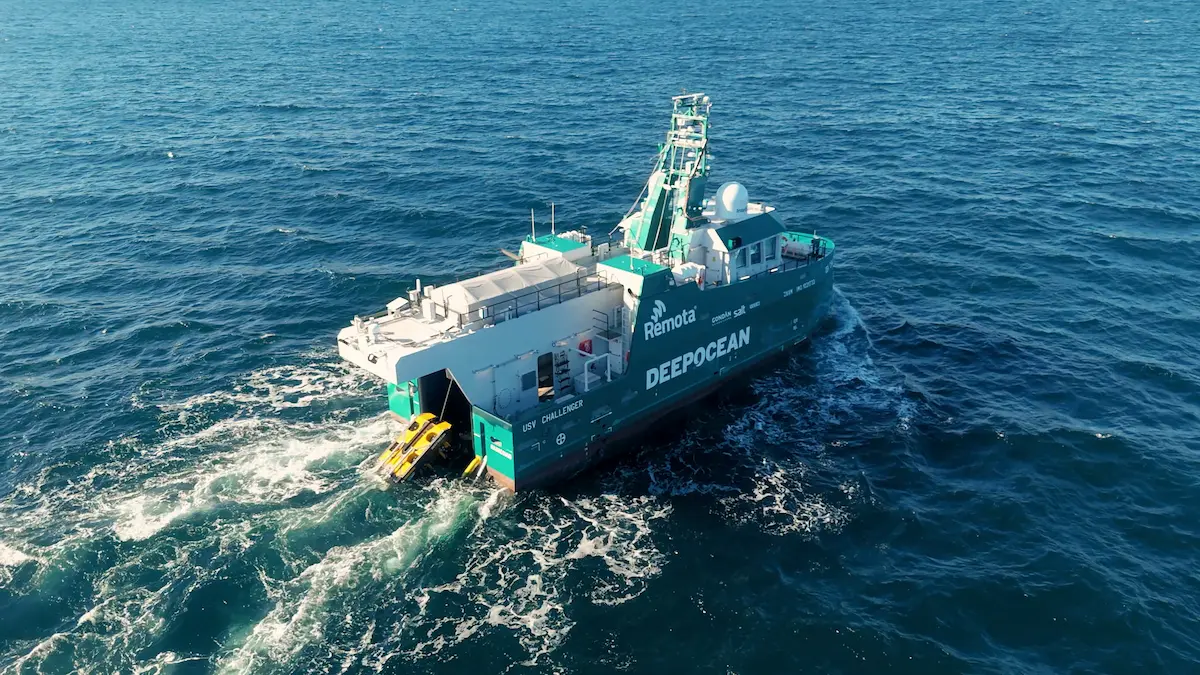
Remotely operated USV Challenger vessel on open water with DEEPOCEAN branding, deploying equipment.

Subsea robotics

DeepOcean has an extensive fleet of +60 high-end remotely operated vehicles (ROV), including electric work-class and observation ROVs, equipped for remote operations, advanced tooling integration, and digital twin-enabled navigation.

Proprietary software and autonomous inspection functionality allows efficient execution in both standard and low-visibility conditions. The systems have strong track record for high uptime and efficiency, and are compatible with custom-engineered tooling.

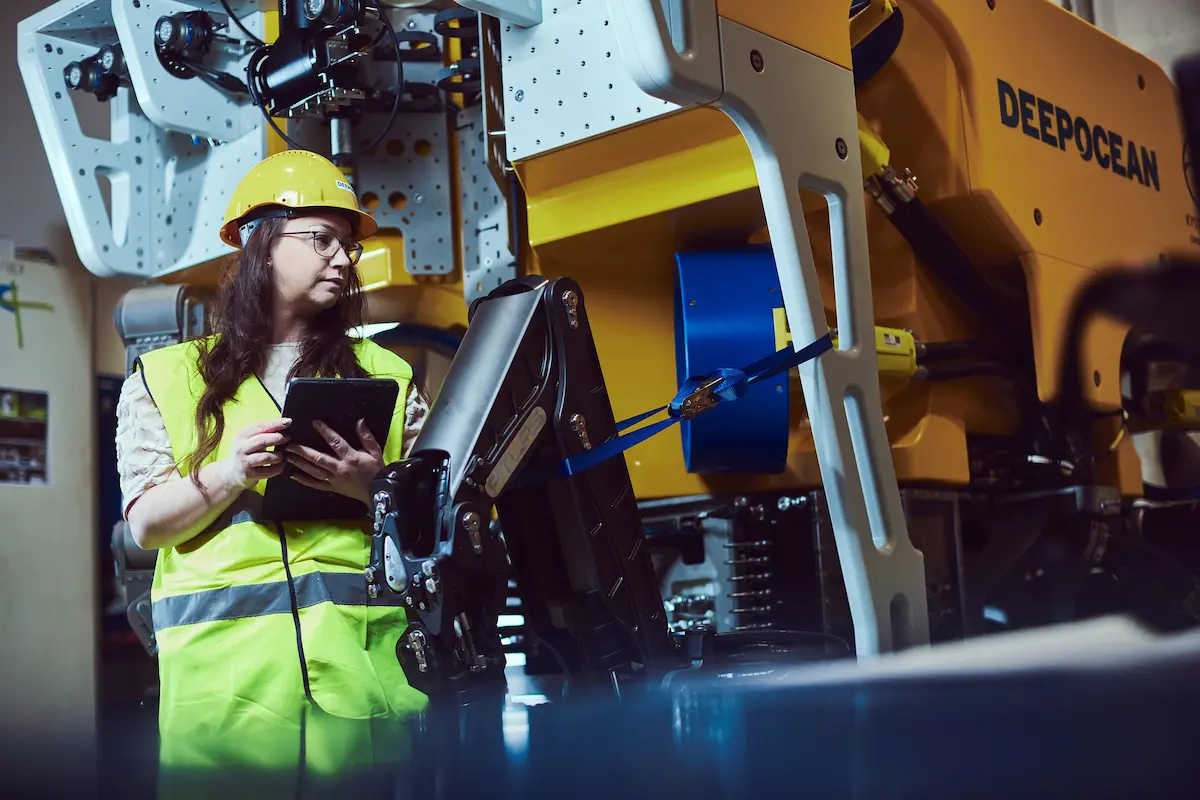
Woman in a yellow hard hat and vest using a tablet near large yellow DEEPOCEAN machinery.

Remote Operations Center (ROC)

Remote technology is the future of offshore operations. Our ROC allows us to operate ROVs located at offshore vessels from our multiple control rooms at Haugesund, Norway.

The ROC is perfect for collaboration between onshore and offshore, allowing different professions to come together onshore supporting the offshore operations through satellite communication systems.

The ROC offers significant benefits, such as:

  • Improved flexibility
  • Reduced cost with less people offshore
  • Reduced HSE exposure
  • Reduced carbon footprint
Two operators using joysticks in a control room with large video monitors displaying Remota DeepOcean data.

Digital twins

Digital twin technology integrates live operational data, positioning systems, inspection data, and 3D visualization into a unified operational environment. DeepOcean’s platform provides real-time representation of subsea assets, vessels, ROVs, and ongoing offshore activities to support planning, monitoring, and execution workflows.

Technology features
Technology features
Man in black shirt presenting underwater exploration images on a large screen to a seated woman.

Spatial engineering

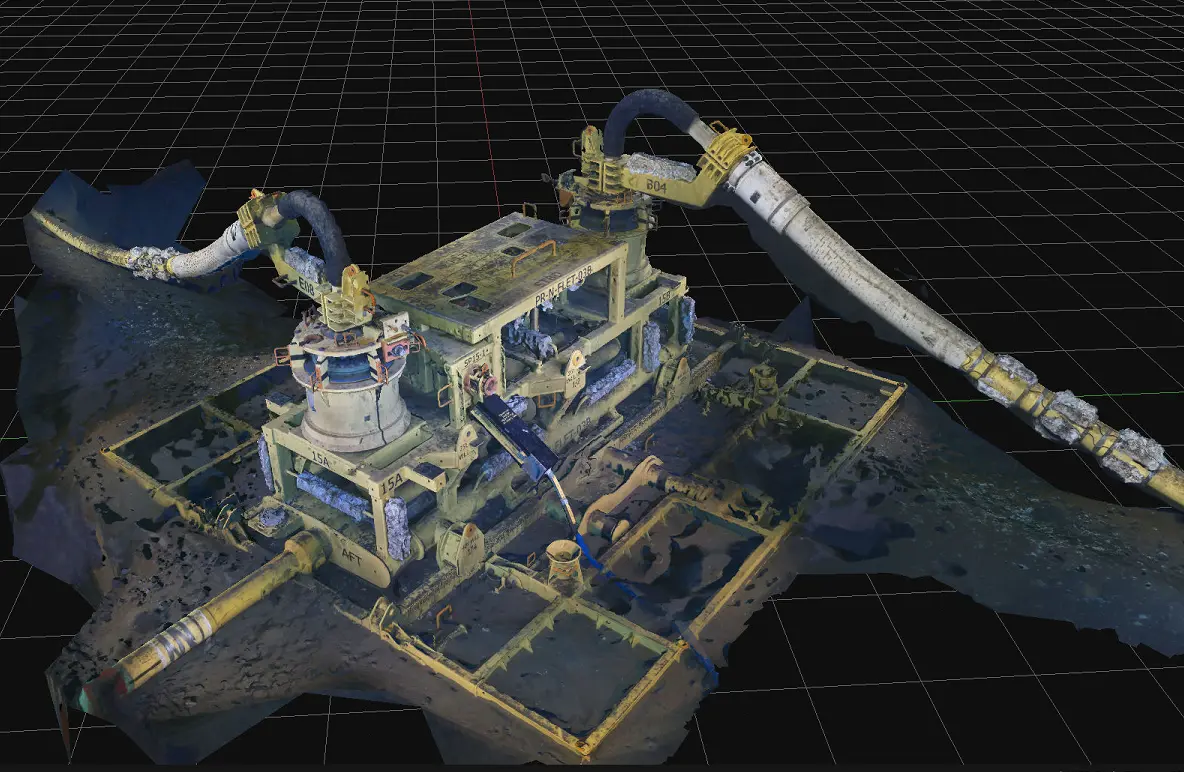
Spatial Engineering combines subsea inspection, photogrammetry, sonar, and 3D imaging technologies to create accurate digital representations of offshore infrastructure.

The service integrates ROV-based data capture with specialized scanning equipment and proprietary processing software to generate detailed 3D models and digital twins of subsea assets. Inspection data, CAD models, sonar, and video footage are combined intoa unified spatial dataset for analysis and planning.

SPECIFICATIONS
Key capabilities
3D model of industrial machinery with pipes and mechanical parts on a grid background.

AI-Powered data analysis

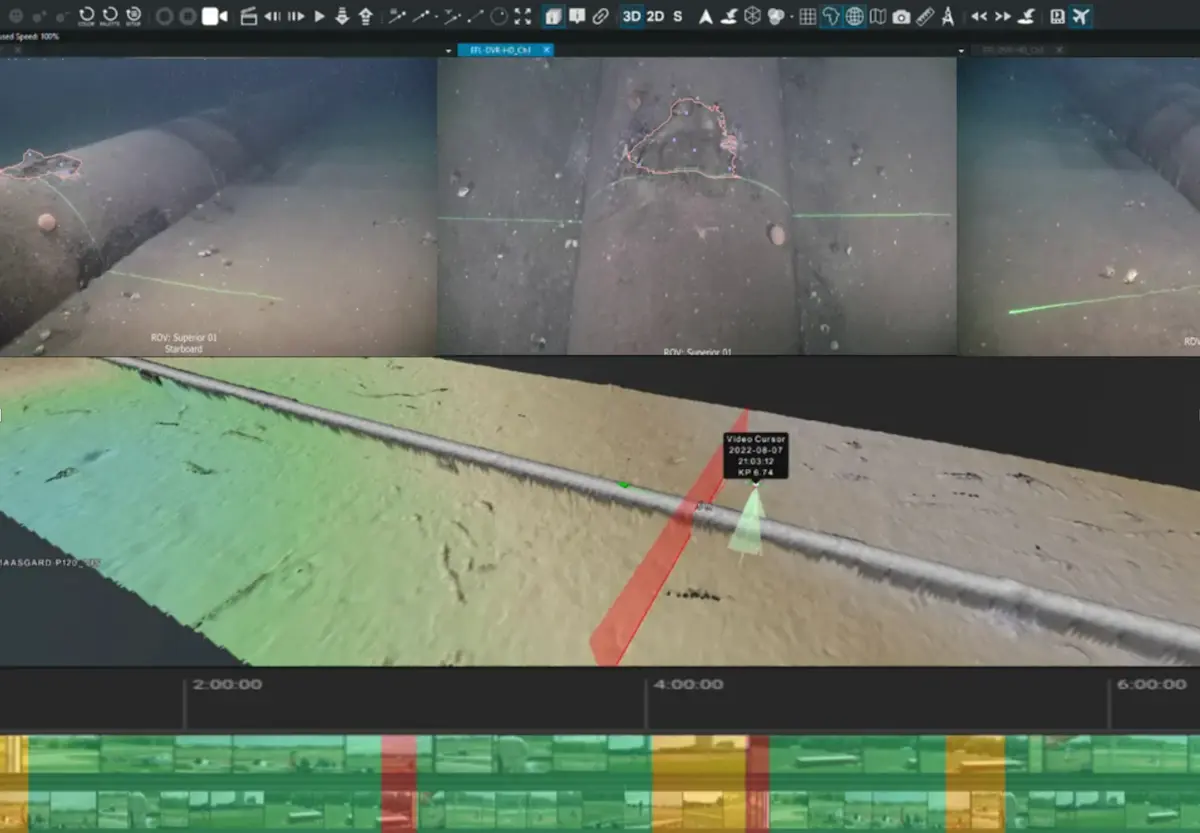
DeepOcean’s AI-powered inspection solutions combine machine learning, computer vision, and digital workflows to support more efficient review and analysis of subsea inspection data. Developed to manage large volumes of ROV inspection footage, the technology assists survey teams by identifying anomalies, prioritizing areas of interest, and reducing manual video review.

The solution integrates AI-assisted workflows with human expertise, supporting consistent inspection workflows while maintaining operator oversight in complex subsea environments.

Technology features
AI-assisted analysis
Digital inspection workflows
Underwater pipeline inspection dashboard showing 3 video feeds and 3D pipeline model with highlighted damage.

Autonomuous Inspection Drone

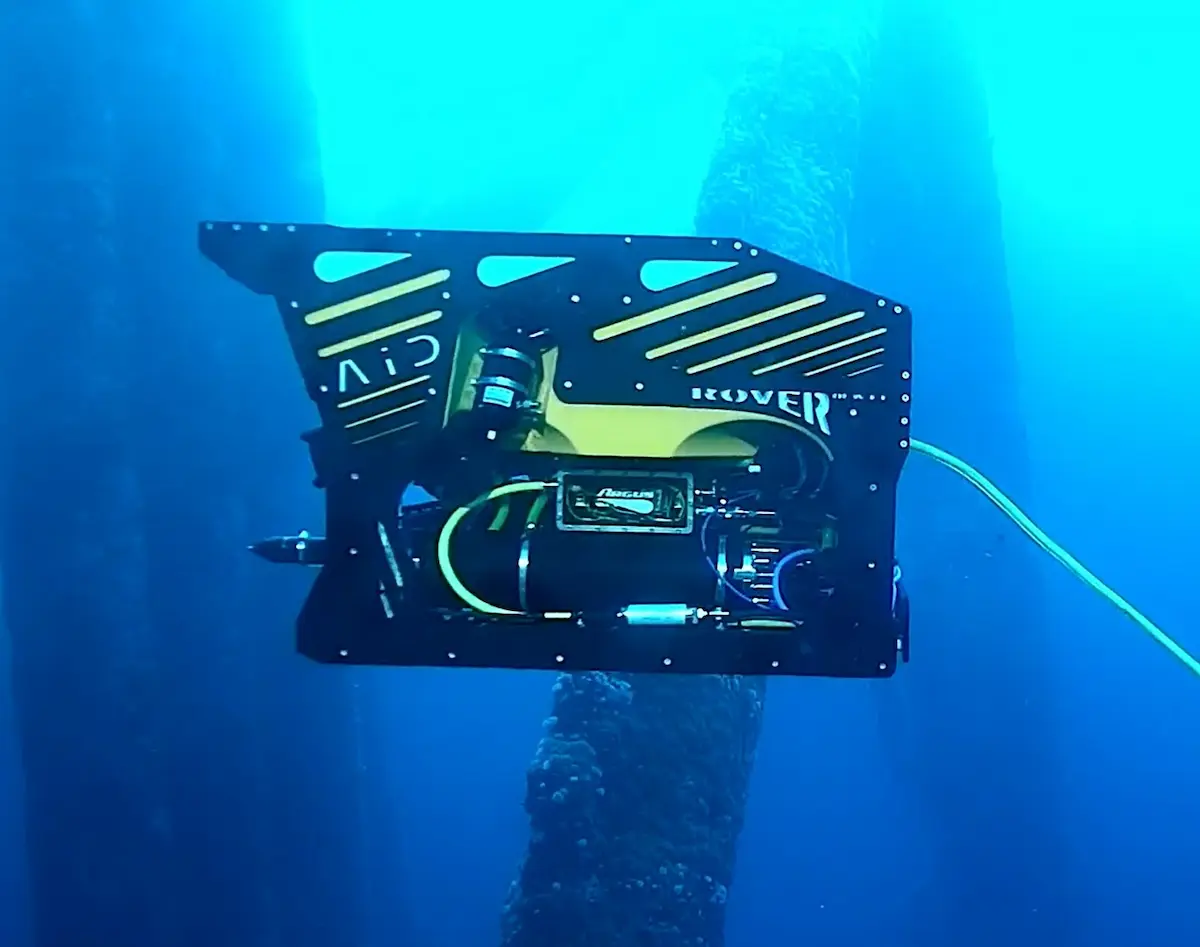
DeepOcean’s Autonomous Inspection Drone (AID) performs semi-autonomous inspection routes that are pre-planned in our in-house mission planner and remotely controlled from the Remote Operation Center (ROC).

Designed for operations in water depths down to 3,000 meters, the system enables stable and repeatable inspections with high-quality data collection.

Key features
System design and operation
Data and digital integration
Black and yellow underwater drone inspecting marine structure covered in barnacles.

Multi-role operations simulators

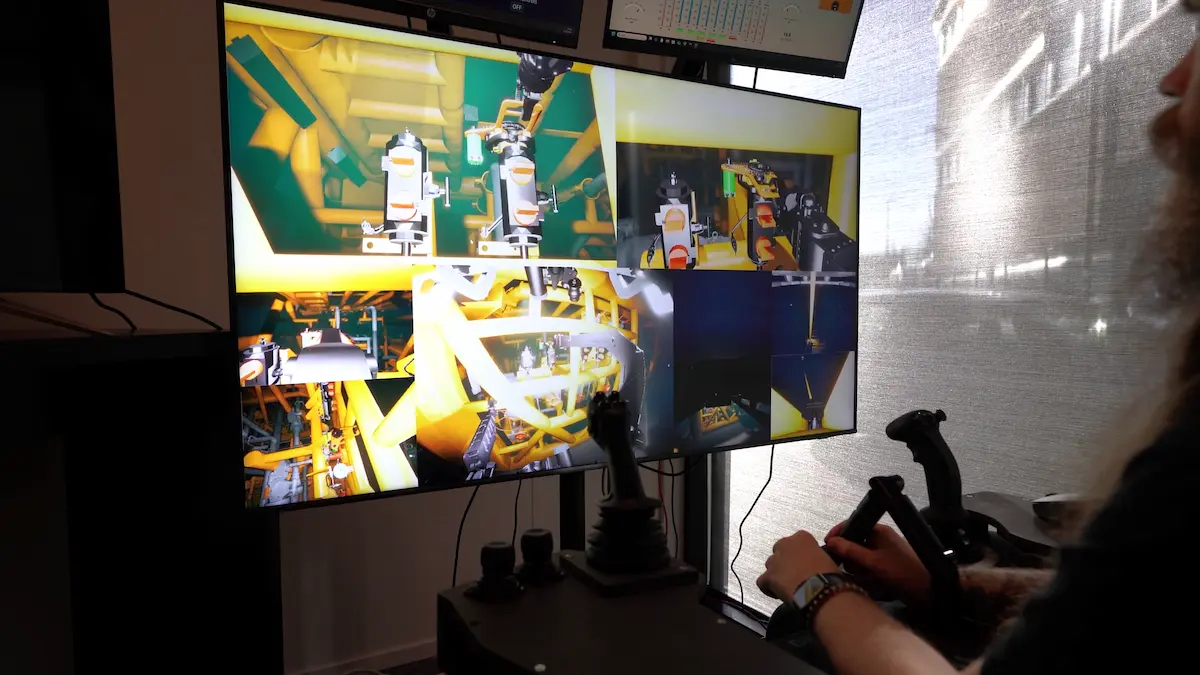
DeepOcean’s multi-role operations simulators combine ROV simulation and digital twin technology to support planning, testing, and validation of subsea operations before offshore execution. The systems enable project teams to assess tooling, access, and operational procedures within a shared digital environment.

By simulating operations prior to mobilization, the technology supports early risk information, validation of tool designs, and refinement of execution plans, enabling more efficient offshore operations and improved collaboration across teams.

Key features
Key features
Person operating a multi-role simulator with multiple screens showing industrial equipment controls.

Digital client portal

DeepOcean’s Digital Client Portal provides real-time access to offshore operational data, project information, and collaboration tools through a unified digital platform. The portal supports operational visibility during project execution by combining live vessel feeds, operational updates, recordings, and document sharing within a single interface.

Designed with a modular architecture, the platform supports secure access to project data while enabling integration of additional digital tools and services as operational requirements evolve.

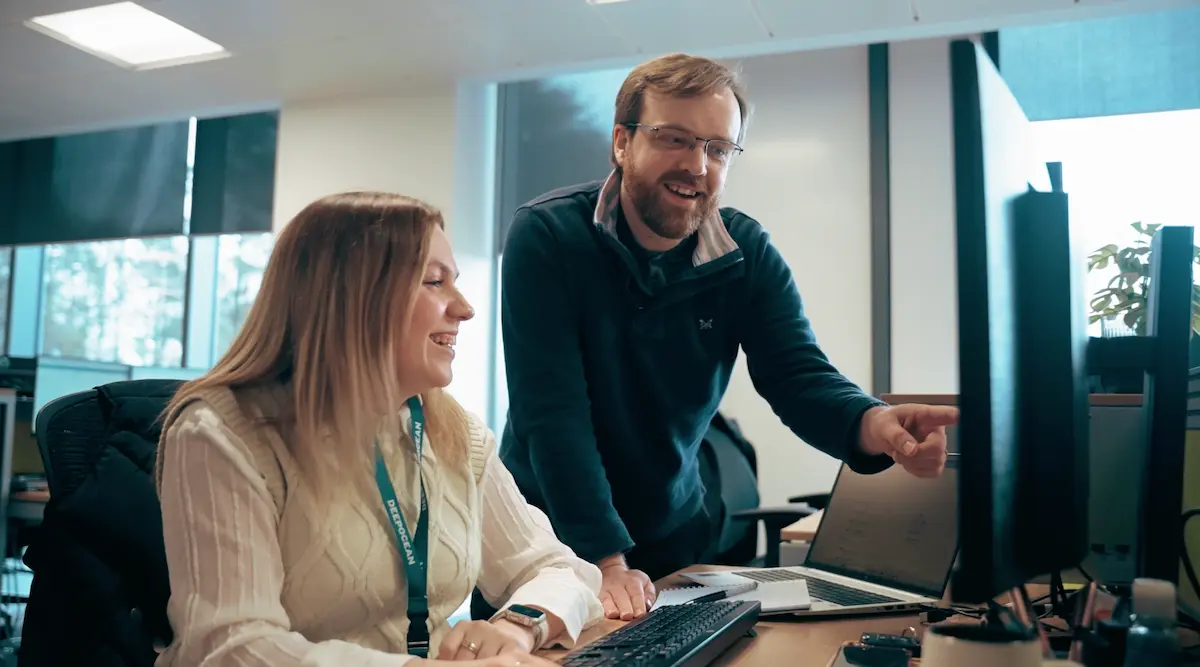
Man points at computer screen as woman smiles, both engaged in a discussion at an office desk.